
TPO Roofing
TPO Roofing in the Twin Cities
The most widely installed commercial flat roofing membrane in Minnesota.
TPO (Thermoplastic Polyolefin) performs well in Minnesota's climate, installs efficiently on large commercial footprints, and offers energy efficiency through its reflective surface. We'll give you a straight answer on whether it's the right system for your building.
- White reflective surface — reduces summer cooling loads
- Heat-welded seams stronger than the membrane itself
- Cold-weather flexibility for Minnesota freeze-thaw
- Available in 45, 60, and 80 mil thicknesses


Get Your Fast, Free & Honest Estimate
Our Approach
What Is TPO Roofing?
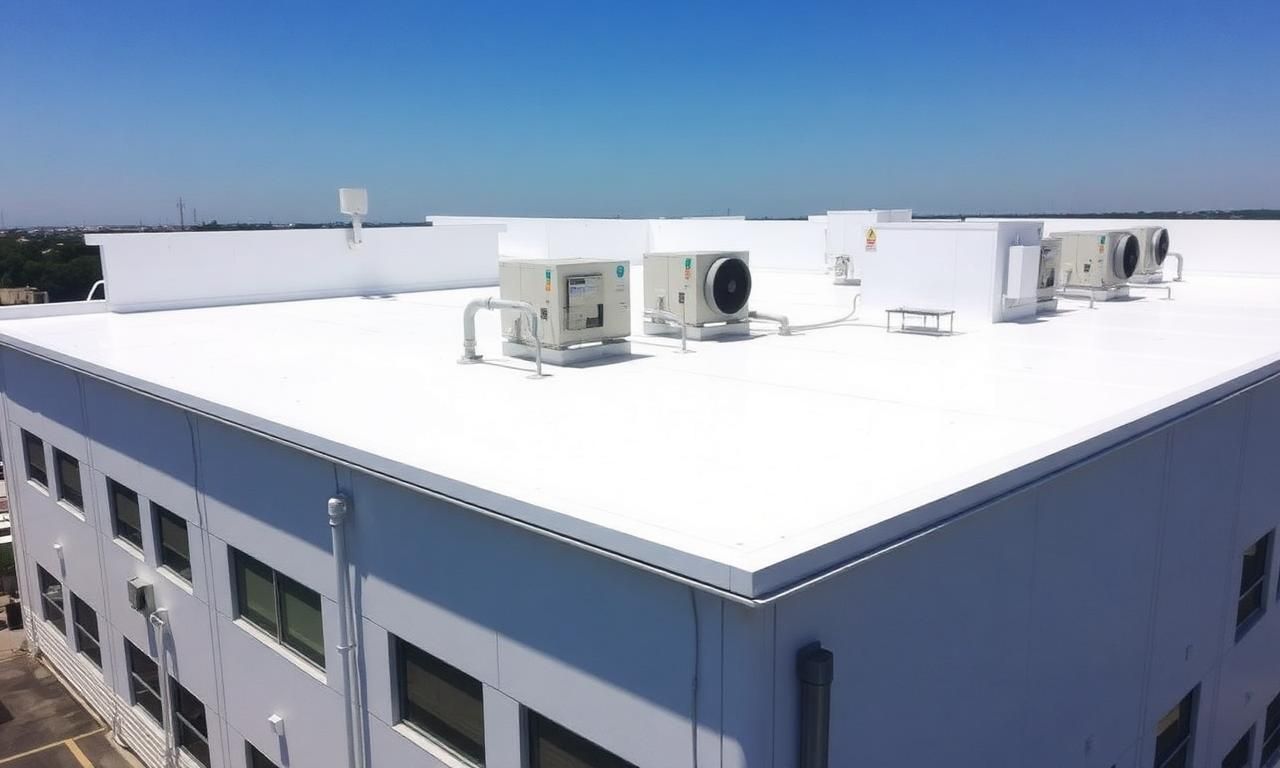
TPO is a single-ply thermoplastic membrane made from co-polymerized rubber. It's installed in rolls and joined using hot-air welded seams — a process that creates seams actually stronger than the membrane itself when done correctly. The white surface reflects solar radiation rather than absorbing it.
Membranes are available in 45, 60, and 80 mil thicknesses, with thicker membranes providing better puncture resistance and longer service life. Attachment methods include mechanically fastened, fully adhered, and ballasted systems.
Why It Works
Why TPO Performs Well in Minnesota
Cold-Weather Flexibility
TPO maintains flexibility at low temperatures, which matters here. Membranes that become brittle in cold weather crack during freeze-thaw cycles — TPO's co-polymer formulation handles temperature cycling better than some competitors.
Heat-Welded Seams
Hot-air welding creates a chemical bond between overlapping membrane sections — not an adhesive joint. Properly executed welded seams are watertight and mechanically strong. This is the single most important quality factor in TPO installation.
Energy Efficiency
White reflective surface (SRI typically above 80) reduces summer cooling loads. For Minnesota buildings with significant cooling demand, this meaningfully reduces operating costs.
Chemical Resistance
Good resistance to ozone, UV, and many common chemicals — relevant for buildings with rooftop equipment, HVAC exhausts, or chemical venting.
Choosing a System
TPO vs. EPDM vs. PVC
Choose TPO when…
Energy efficiency is a priority, you want cost advantages over PVC with similar heat-welded seam performance, or the building has large uninterrupted roof areas where large-format welding is efficient.
Consider EPDM when…
Summer cooling demand is minimal and maximizing winter heat absorption matters, budget is the primary driver, or an existing EPDM system supports a compatible re-cover.
Consider PVC when…
The building has chemical exposure — restaurants, food processing, chemical venting — and chemical resistance is more important than upfront cost.
Benefits
TPO Benefits for Minnesota Commercial Properties
- Strong energy efficiency through solar reflectivity
- Heat-welded seams that outlast adhesive-joined systems
- Good flexibility through Minnesota freeze-thaw cycles
- Cost-effective relative to PVC with similar benefits
- Multiple thicknesses for different performance / budget needs
- Compatible with rooftop HVAC, solar, and drainage configurations
Investment
TPO Roofing Cost in the Twin Cities
Typical 2025–2026 installed pricing for Minnesota commercial properties:
- 45 mil TPO$6.50–$8.50 / sq ft
- 60 mil TPO$7.50–$10 / sq ft
- 80 mil TPO$9–$11.50 / sq ft
A properly installed system with quality materials typically lasts 15–25 years in Minnesota's climate. The biggest variable in TPO lifespan is installation quality — specifically seam integrity. Thicker membranes (60–80 mil) generally outperform 45 mil over time.
Common Questions
FAQs
Schedule Your TPO Roofing Evaluation
If you're evaluating TPO for a new installation or replacing an existing flat roof, we start with a full inspection and give you an honest recommendation on system selection, thickness, and attachment method.