
Commercial Flat Roofing
Commercial Flat Roofing in the Twin Cities
The right flat roofing system for your building. Installed to perform in Minnesota.
Most commercial buildings in Minnesota have flat or low-slope roofing — and most problems start with a system that wasn't specified correctly for the climate, installed with proper drainage, or maintained over time. We give you a clear, honest assessment of what your roof actually needs.
Call (612) 345-4799

Get Your Fast, Free & Honest Estimate
Our Approach
The Right System, Specified for Minnesota
Specifying a flat roofing system without accounting for Minnesota's snow loads, freeze-thaw cycles, and drainage challenges is how systems fail ahead of their expected lifespan.
We inspect the full system — membrane condition, drains, insulation, deck, and flashing at every penetration — before recommending repair, re-cover, or replacement. The recommendation we give is the one we'd give if you were paying out of pocket either way.
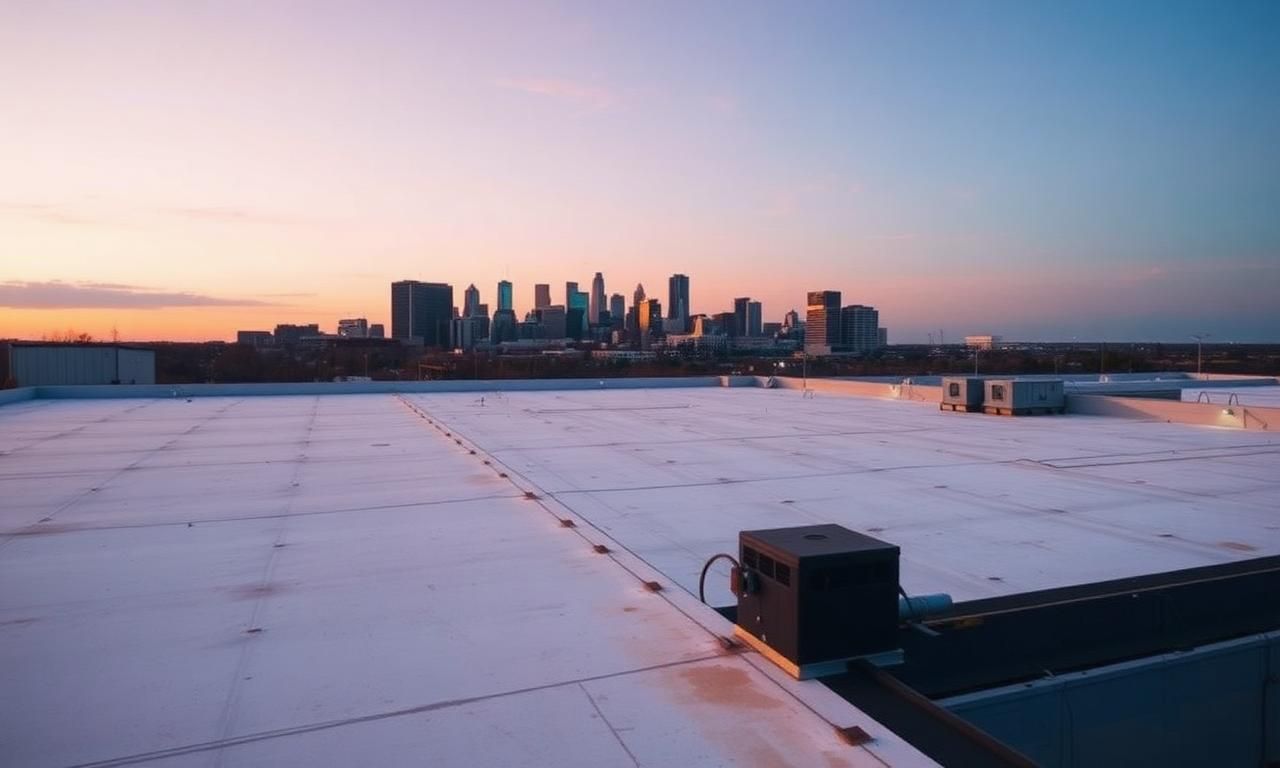
Systems We Install
Commercial Flat Roofing Systems
TPO (Thermoplastic Polyolefin)
White reflective membrane with heat-welded seams. The most widely installed commercial flat system across Minnesota for cost-efficiency, energy performance, and installation speed.
Learn moreEPDM (Rubber Roofing)
Synthetic rubber with a 50+ year track record in cold climates. Superior low-temperature flexibility. Black EPDM absorbs heat and reduces winter heating loads.
Learn morePVC (Polyvinyl Chloride)
Premium heat-welded thermoplastic with excellent chemical resistance. The standard for buildings with grease exposure, chemical venting, or food service applications.
Modified Bitumen
Multi-layer reinforced asphalt with strong puncture resistance. Common on older buildings and frequently used for re-cover applications where the existing system can stay in place.
What You Get
Commercial Flat Roofing Done Right
A commercial roof project lives or dies on system selection, drainage design, and installation discipline. We treat all three as non-negotiable.
- Systems specified to Minnesota's freeze-thaw and snow load conditions
- Drainage and slope designed for ponding-water prevention
- Repair, re-cover, and full replacement assessments — not a default upsell
- Itemized estimates with full scope documentation
- Manufacturer-certified installation methods on every project

Trusted Contractors
National Roofing Contractors Association
As an NRCA member, Prominent Roofing is part of the oldest and most respected trade association in the roofing industry. Membership means we stay current with the latest installation standards, safety practices, and code updates set by the organization that helps shape them. For our customers, that translates to work performed to nationally recognized best practices — by a contractor held to a published code of ethics, not just our own word.
Investment
Commercial Flat Roofing Cost in Minnesota
Installed pricing for 2025–2026:
- EPDM$5–$9 / sq ft
- TPO$6.50–$11.50 / sq ft
- PVC$8–$14 / sq ft
- Modified Bitumen$5.50–$9 / sq ft
For large commercial footprints (10,000+ sq ft), small per-square-foot differences represent significant total dollars. We provide detailed, itemized estimates with full scope documentation — including removal of the existing system, insulation requirements, drain modification, and all penetration flashing.
Minnesota Conditions
Minnesota-Specific Flat Roofing Challenges
The conditions that determine whether a commercial flat roof lasts 10 years or 25 are site-specific and climate-driven. Here's what we account for on every Twin Cities project.
Snow Load
Flat roofs hold snow — unlike pitched roofs where it slides off. Accumulated snow creates structural load the deck must be designed to handle. Snowmelt that refreezes over clogged drains creates ice that forces water under membrane seams.
Freeze-Thaw Cycles
Minnesota averages well over 100 freeze-thaw cycles annually. Any membrane that loses flexibility at low temperatures develops stress cracks. System selection must account for how the membrane performs at -10°F, not just in mild conditions.
Ponding Water
Flat roofs require positive drainage slope — minimum 1/4 inch per foot — to prevent ponding. Standing water accelerates membrane deterioration and creates freeze-thaw damage. Drainage design is as critical as membrane selection.
Common Questions
FAQs
Ready for a Straight Answer from a Twin Cities Roofer?
Call once. We'll assess your roof, handle your claim, or get you scheduled — no runaround, no pressure.