EPDM Roofing
EPDM Roofing in the Twin Cities
The cold-climate standard for commercial flat roofing.
EPDM has been the benchmark for cold-climate commercial flat roofing for decades. In Minnesota it's a proven performer — flexible in extreme cold, UV and ozone resistant, and well-suited to the freeze-thaw conditions that challenge other membranes.
- Flexible to -40°F — handles Minnesota freeze-thaw
- 20–30 year proven lifespan in northern climates
- Available in 45, 60, and 90 mil thicknesses
- Black option absorbs heat to reduce winter heating loads


Get Your Fast, Free & Honest Estimate
Our Approach
What Is EPDM Roofing?
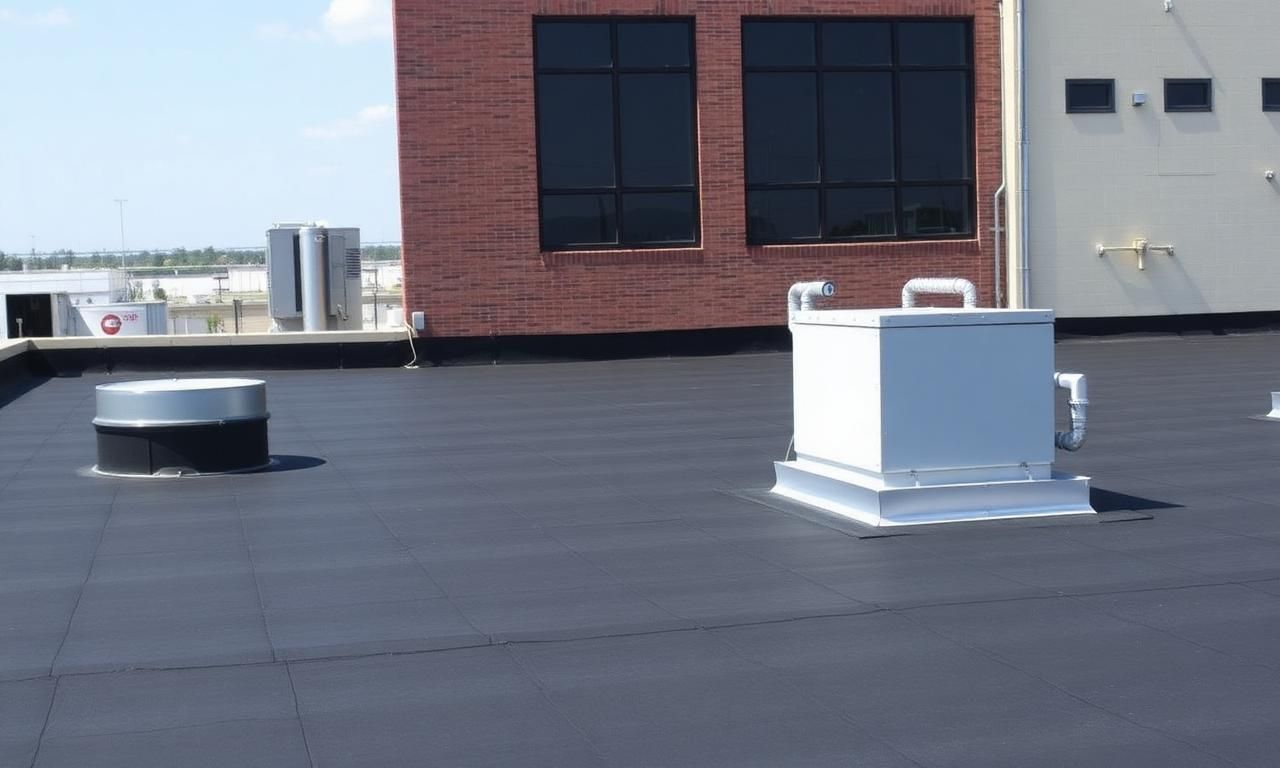
EPDM is a single-ply synthetic rubber membrane derived from ethylene and propylene. It's been installed on commercial buildings across North America since the 1960s — a track record that gives us real data on how it performs over time in cold climates.
EPDM is available in 45, 60, and 90 mil thicknesses, in black and white finishes, and in large-format rolls that minimize seam count on large footprints. It can be mechanically attached, fully adhered, or ballasted with river rock.
Why It Works
Why EPDM Performs in Minnesota's Climate
Extreme Cold Flexibility
EPDM remains flexible at temperatures as low as -40°F. Membranes that become rigid in cold weather develop stress cracks at seams and penetrations during freeze-thaw cycling. EPDM handles this better than most competing systems.
Low Thermal Expansion
EPDM has a low thermal expansion coefficient — it moves very little with temperature changes. Less movement means less long-term stress on seams and attachment points.
UV and Ozone Resistance
Inherent resistance to UV radiation and ozone — the two primary environmental factors that degrade roofing membranes over time.
Heat Absorption (Black EPDM)
Black EPDM absorbs heat, reducing winter heating loads. For Minnesota buildings where heating costs are a bigger concern than cooling, this is a meaningful energy benefit.
Choosing a System
EPDM vs. TPO: Which Is Right for Your Building?
EPDM tends to be the better choice when…
Winter heating load reduction is more valuable than summer cooling savings, budget is a primary constraint, the building has an existing EPDM system for a compatible re-cover, or you want a proven long-track-record system.
TPO tends to be the better choice when…
Summer energy efficiency is a priority, heat-welded seams are preferred for long-term integrity, or the building has chemical exposure from rooftop equipment.
Benefits
EPDM Benefits for Minnesota Commercial Properties
- Proven 20–30 year lifespan in northern climates
- Excellent cold-temperature flexibility
- Low thermal expansion reduces long-term seam stress
- Strong resistance to UV, ozone, and weathering
- Large-format rolls minimize seam count on big footprints
- Black membrane option reduces winter heating loads
- Lower upfront cost than TPO or PVC for many applications
Investment
EPDM Roofing Cost in the Twin Cities
Typical 2025–2026 installed pricing for Minnesota commercial properties:
- 45 mil EPDM (mechanically attached)$5–$7.50 / sq ft
- 60 mil EPDM (fully adhered)$6.50–$9 / sq ft
- 90 mil EPDM$8–$11 / sq ft
EPDM is generally 20–30% less expensive upfront than comparable PVC and somewhat less than TPO in many applications. Seam integrity is the primary long-term vulnerability — EPDM seams are formed with tape and adhesive rather than heat welding. We follow manufacturer protocols precisely.
Common Questions
FAQs
Schedule Your EPDM Roofing Evaluation
Whether you're evaluating EPDM for a new installation or assessing an existing system, we start with a full inspection and give you a clear recommendation on the right approach for your building.